Memory Machine
A downloadable game for Windows
Memory Machine
A used family PC. An old web inside it. A locked profile named Sam.
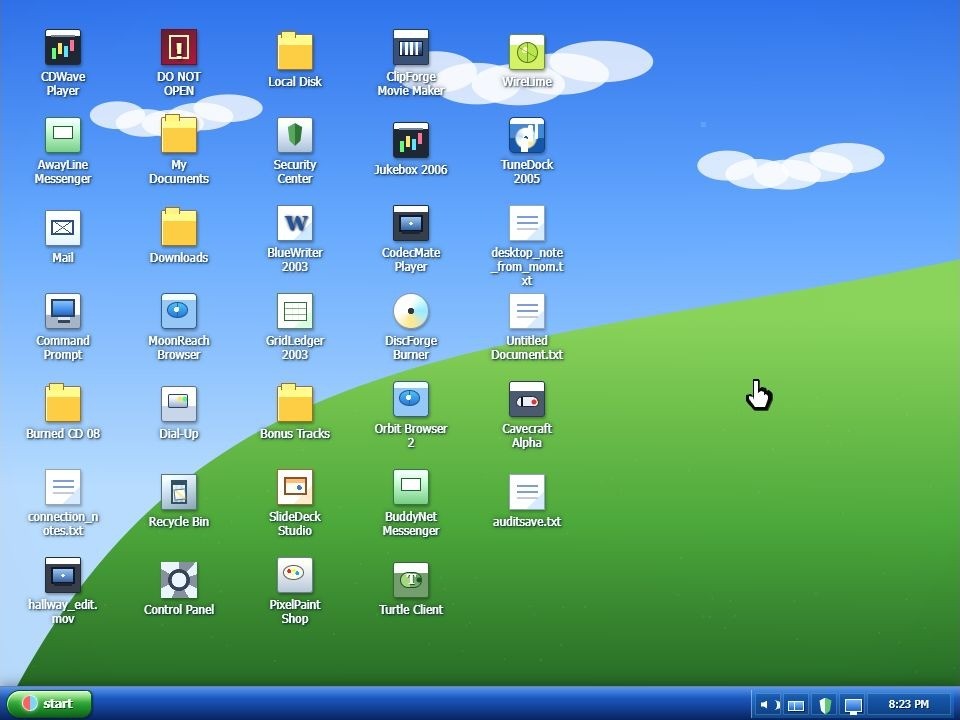
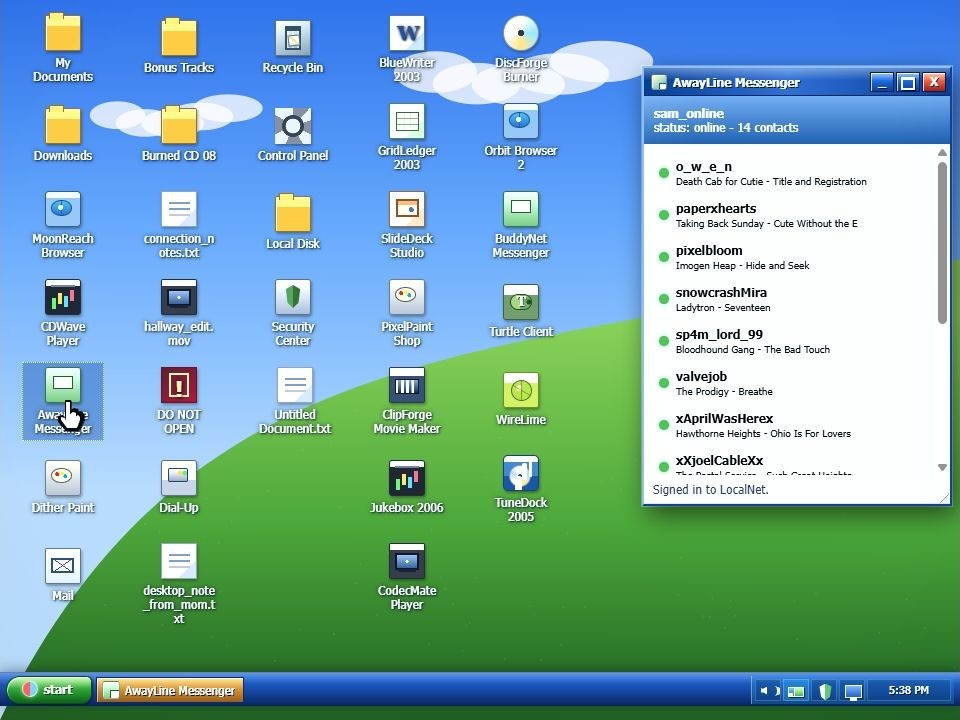
Memory Machine is a free early build of an indie desktop game about sitting down at a Windows XP era computer that clearly belonged to someone else. You start as a guest. Sam's account is locked. The desktop clutter, browser history, music apps, forums, videos, emails, games, and downloads keep pointing back to him.
This is not a menu pretending to be a computer. It is a small offline internet civilization built around files, apps, forums, downloads, chats, games, and old web habits.
What You Do
You use the computer.
Open the browser. Search the fake web. Read forums. Try old video pages. Follow download links. Launch apps. Listen to music. Play little web games. Notice usernames repeating across sites. See what Sam touched. See what the family used the machine for.
The game is built around the feeling of borrowing a machine that already had a life before you arrived.
The Machine
The PC has installed apps, old shortcuts, music tools, chat clients, games, notes, and clutter. Some apps are useful. Some are jokes. Some are suspicious. Some are just the kind of thing a teenager, a parent, or a friend installed and never cleaned up.
Apps You Can Poke At
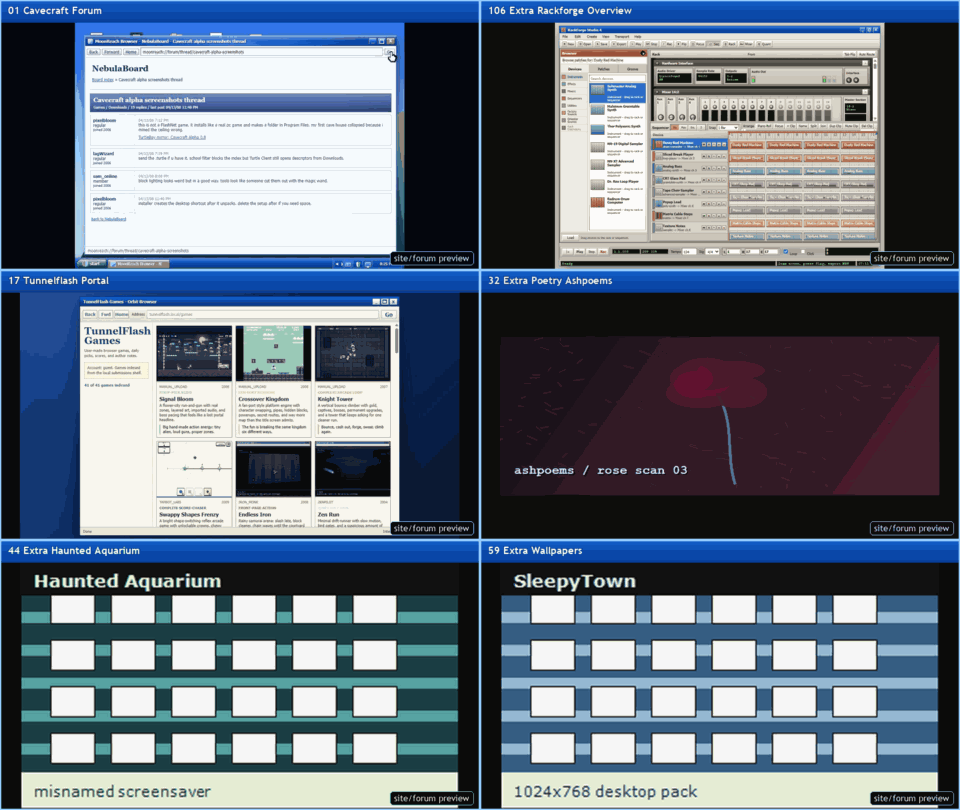
Memory Machine includes XP-style apps and utilities like RackForge Studio 4, TuneDock 2005, ClipForge Movie Maker, File Factory 2005, BuddyNet Messenger, Turtle Client, Cavecraft Alpha, PixelPaint Shop, old browser games, and little utilities.
The goal is not to make every app a full professional tool. The goal is to make the PC feel usable, specific, funny, personal, and a little too lived-in.
The Old Web
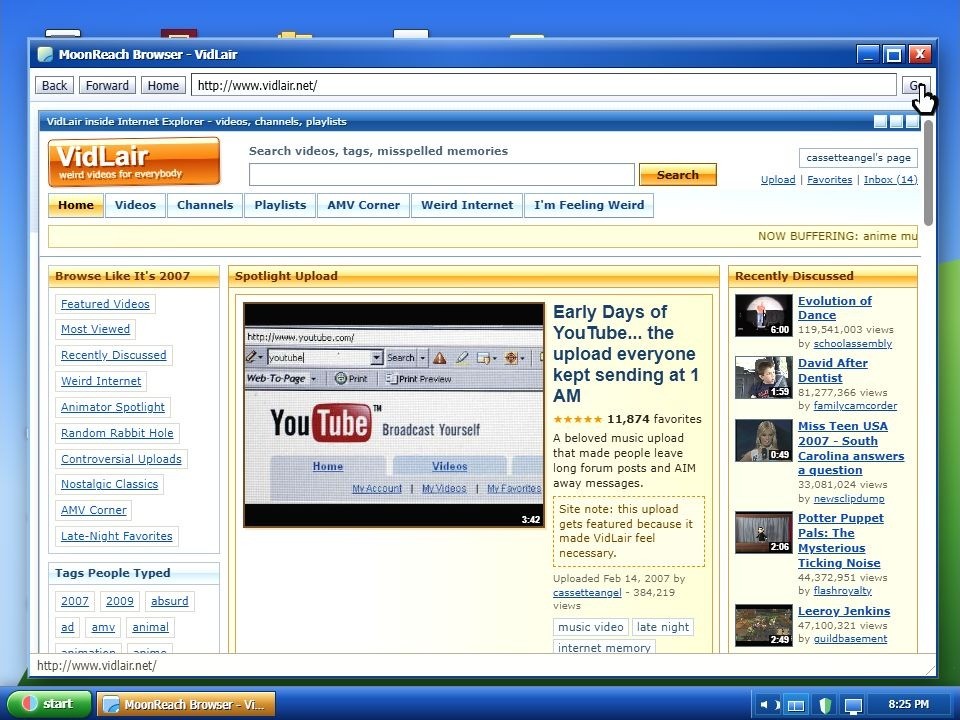
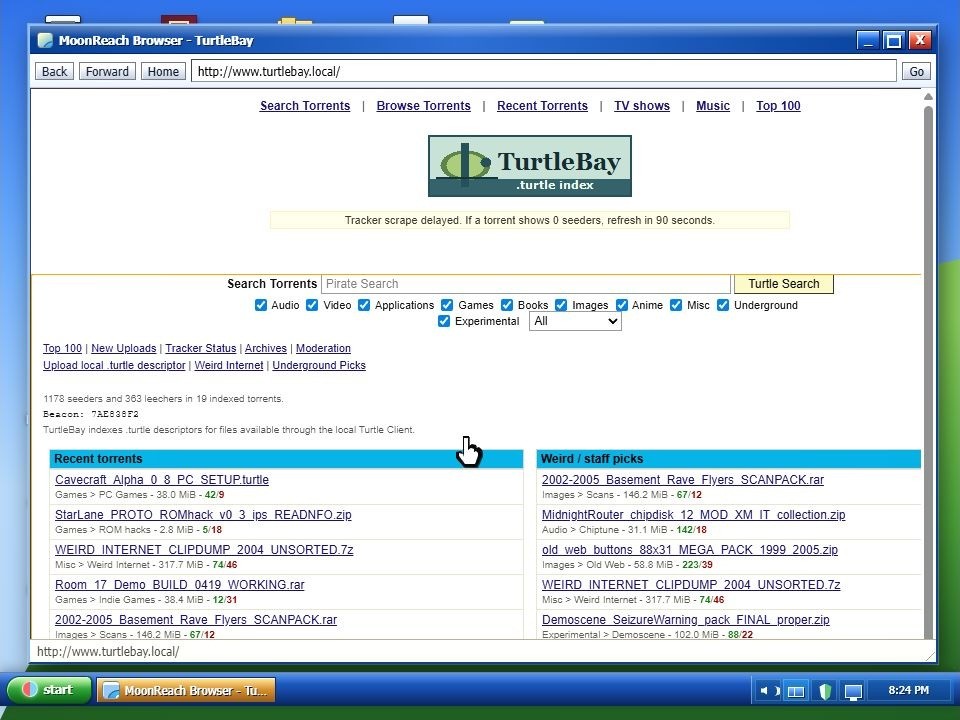
The in-game internet is fake, local, and built for texture. Search results lead to old sites, download pages, forums, profile pages, video pages, weird personal sites, music pages, and little corners that feel like they were updated by actual people with actual obsessions.
A username in a forum can matter somewhere else. A download can show up in an app. A friend can mention something that exists elsewhere. The web is not only set dressing. It is how the machine remembers.

Forums, Downloads, And Web Rot
There are forum threads, dead-link energy, personal pages, download comments, video culture, school pages, hobby pages, travel pages, and the kind of tiny web stuff that used to make the internet feel handmade.
This build is not about browsing the real internet. It is about the memory of a web where every page felt like someone touched it.
TunnelFlash Games
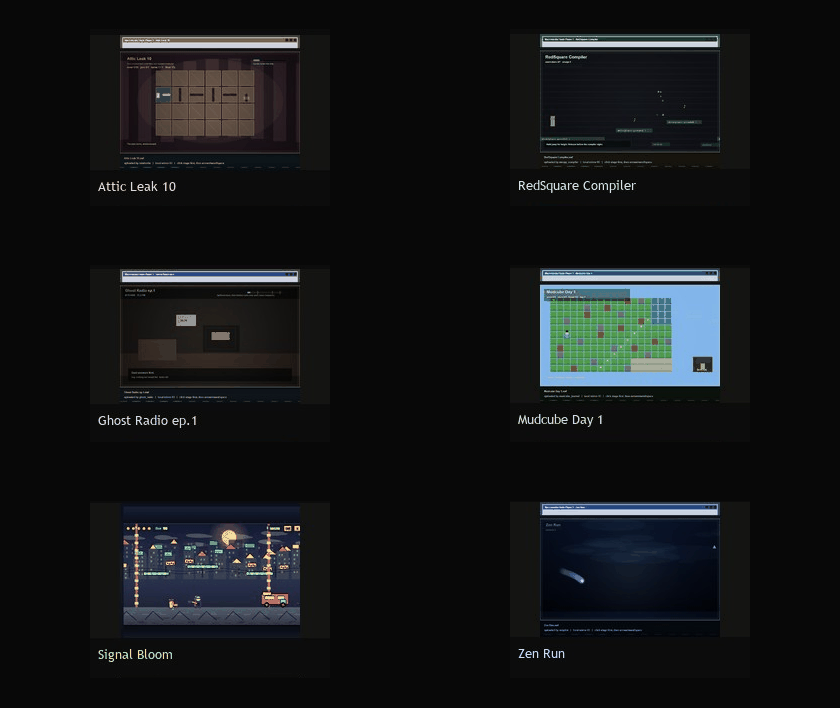
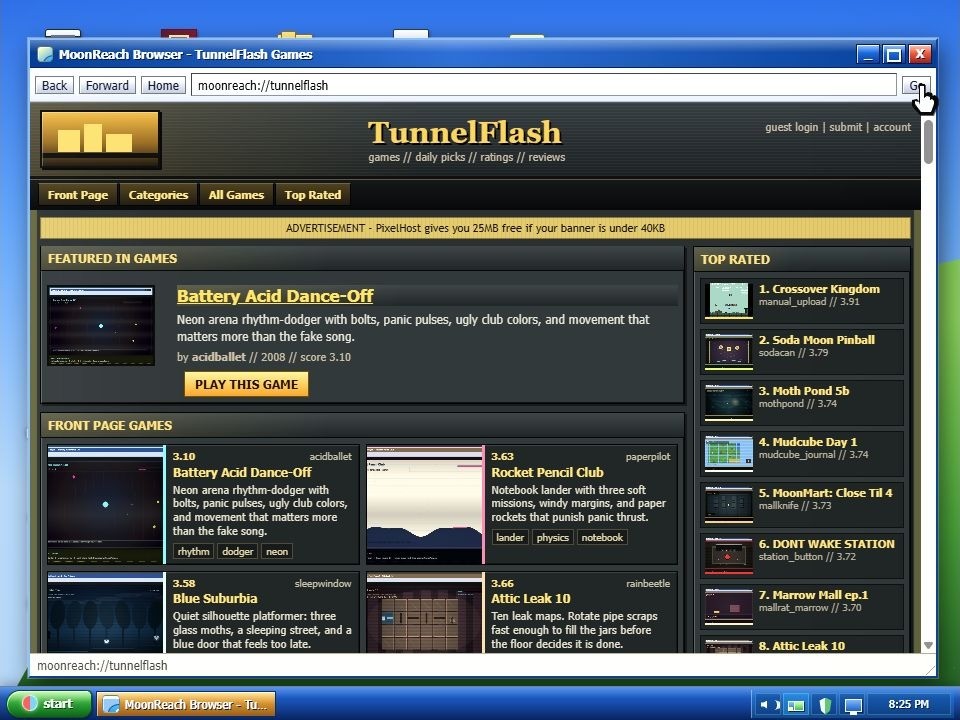
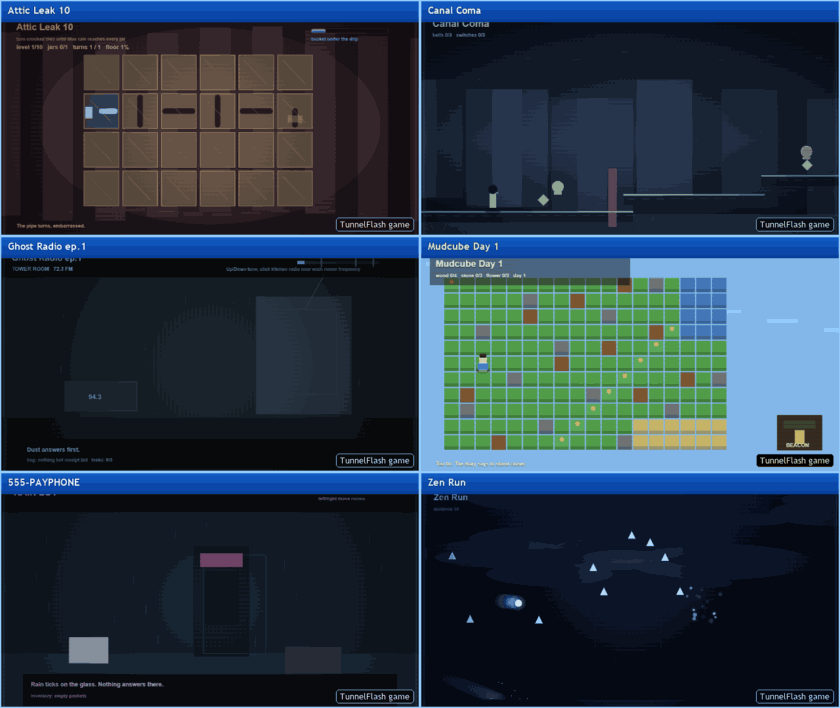
The machine has a fake browser-game portal full of small games that feel like something you would find while killing time after school, swapping links, or downloading things you probably should not be downloading.
This build includes 41 bundled TunnelFlash game previews.
Cavecraft
Cavecraft is one of the in-world games. It is not presented like a modern launcher tile. It is something you find through the fake web, through download culture, through the same old internet routes the rest of the machine uses.


Sam
Sam is the locked account on the machine.
You are not Sam. You are a guest. But Sam was online before you got here. People know him. Downloads point back to him. Posts, chats, music, habits, and little traces keep making the locked profile feel less like a puzzle door and more like a person who was part of this internet.
The story is not delivered as a clean cutscene. It is found through use.
Current Build Note
This is a free early build. There will be rough edges. The point of this release is to let people touch the machine, understand the premise, and feel the world.
If you like old operating systems, fake internet archaeology, forum culture, abandoned PCs, freeware energy, browser games, music apps, chat logs, and the strange intimacy of someone else's desktop, this is for you.
Links
* Trailer: embedded above through itch.io's video player
* Music: Memory Machine on Spotify: https://open.spotify.com/artist/3U4PdmjLiMmLZGHtr8h0H2
* Website: memorymachine.online: https://memorymachine.online/
* Instagram: @memorymachine.online: https://www.instagram.com/memorymachine.online/
Download
Download the Windows build, unzip it, and run the executable.
Recommended: headphones, a little patience, and the willingness to click things that look like they were last updated at 2:13 AM in 2007.
Download
Install instructions
Download the Windows build, unzip it, and run Memory Machine.exe. This is a free early build, so expect rough edges. The PC, apps, old web, chats, downloads, and games are already there to explore.
Leave a comment
Log in with itch.io to leave a comment.